
What Justice Means Today
By Nina Lakhani
I’ve spent my whole career reporting on all kinds of injustices, but have recently found myself ruminating on what justice means even more than usual..
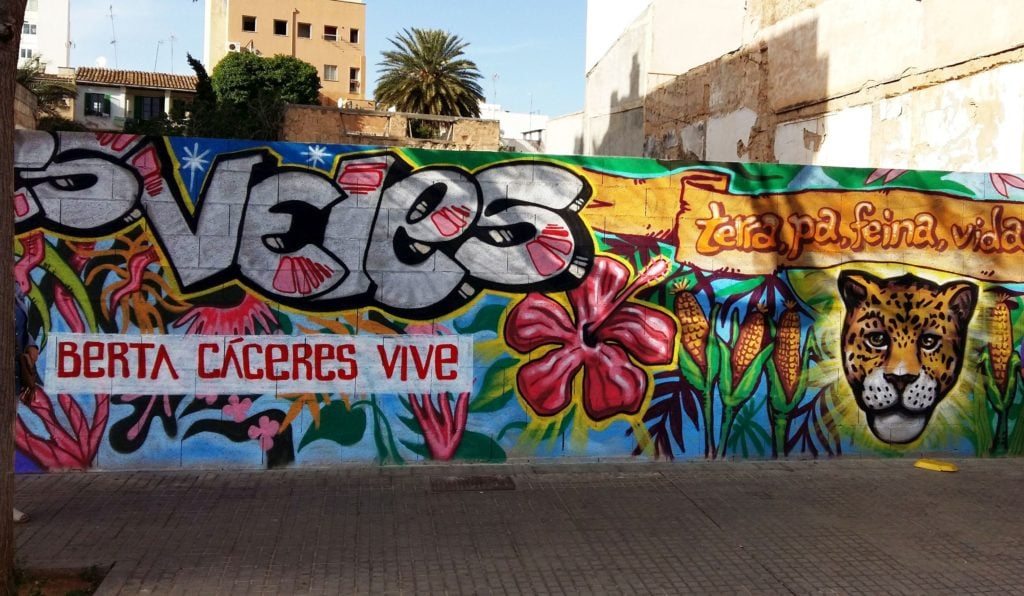
Last week (2 March at 11.40pm) marked 10 years since the assassination of Berta Cáceres, the celebrated Indigenous environmental justice leader from Honduras who was gunned down in retaliation for a campaign to stop a fraudulently licensed, internationally financed dam. It seems like a lifetime ago that I met Berta as she faced arrest on false criminal charges, but also like nothing's changed. Her name was on a hit list of social leaders that had been circulating since the 2009 coup—orchestrated by a right-wing elite which the US government at the very least tacitly welcomed. The coup was an utter disaster for Honduras, ushering in a narco government that oversaw deadly violence against environmental and land defenders in order to sell off the country’s natural resources. So far eight men including the hired assassins and several US-trained former military officers have been convicted, but the corporate, state and economic powerbrokers implicated in the crime and attempted cover-up have not faced justice.
I didn't make it to Honduras for the 10th anniversary due to an epic visa failure on my part (which I am still not over), but working on a deep dive for Drilled brought back a lot of big feelings. I spent several years investigating Berta’s murder, and eventually wrote a book about her life and death. It did not make me popular among the country's elites, leading to smear campaigns by US and Honduran officials, as well as pretty serious threats orchestrated by military intelligence in conjunction with a criminal group masquerading as a campesino collective. But perhaps the worst, or at least most stressful, was more than a year of threatening letters from a top libel law firm in London on behalf of a billionaire banker threatening to sue me for millions of dollars that I didn’t have. I refused to fold, but the anxiety was overwhelming at times especially as the publisher did a deal behind my back and proceeded to try and censor foreign language editions of the book. The billionaire banker eventually lost interest, while I never made a cent from the book. Still, I hope that my reporting contributed something to the long fight for justice for Berta, which continues thanks to her indomitable children.
This is the type of dogged reporting that Drilled supports, but it takes time and resources especially in Latin America where being a journalist or an activist or a woman can make you a target.
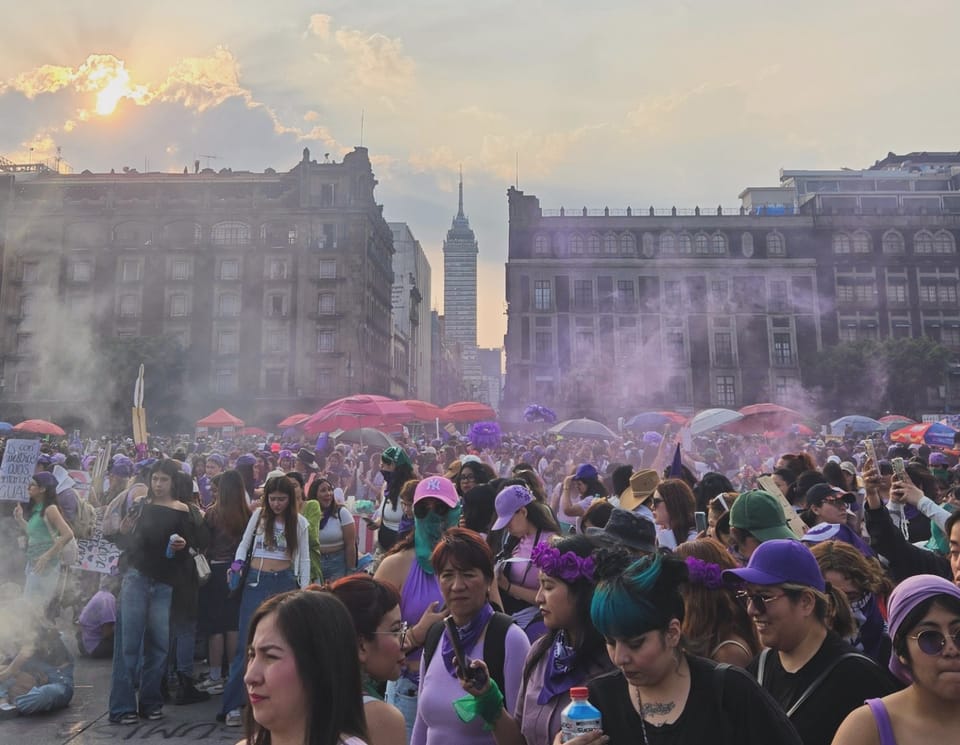
Berta was despised by the elites in part because she was a woman. Her murder should also be seen as a political feminicide, a clear message to others daring to stand-up against the neoliberal, patriarchal status quo. She was very much in my thoughts on International Women’s Day on 8 March, when I joined thousands of women and girls (men are mostly not welcome) wearing purple as they marched through Mexico City to demand justice and accountability for what can only be described as epidemic levels of gender violence. Impunity remains the norm here too, and so in recent years victims and survivors have taken to posting the name and photo of sexual and other violent abusers on walls and posts along the route, a powerful form of direct action that seems necessary when the justice system is designed to serve the patriarchy. Berta understood that protests and other acts of nonviolent civil disobedience aren't enough to bring about social and political reforms, but without them change is impossible.
Berta’s life and death remain relevant today, as the rise of the far right wreaks war, mass casualties, environmental destruction and climate disaster on the planet. ‘Wake-up, wake-up, humanity. We're out of time. We must shake our conscience free of the rapacious capitalism, racism and patriarchy that will only assure our own self destruction,’ she warned while accepting the Goldman Environmental Prize less than a year before her murder.
Bringing me to the latest illegal war being conducted by the US and Israel, which has already led to hundreds of deaths, mostly in Iran. Yet the indirect death toll from the environmental devastation and climate impact of this war, and the ongoing genocide and ethnic cleansing of Palestinians, will inevitably be much higher. States and corporations must be held accountable for all the harms caused by illegal wars and occupations, and that absolutely includes the deliberate destruction of wetlands, forests, farmland, and water resources, as well as the massive greenhouse gases emitted during warfare. Fossil fuels are driving climate change, and climate change is driving conflict around the world, which was the topic of last week’s timely panel organized by Covering Climate Now.
This week's must-reads
- [Report] The weaponisation of social media. How defenders of land and democracy are smeared and criminalised in Guatemala by Global Witness. In what is part of a global trend linking Big Tech to the biggest existential threats facing humanity (climate denialism, the rise of fascism, AI -fueled illegal wars), deregulation of social media platforms like Facebook, X and TikTok is also helping right-wing elites in Guatemala orchestrate online smear campaigns against anti-corruption activists, environmental defenders and Indigenous leaders. Flooding social media with defamatory and hateful accusations often lays the groundwork for spurious criminal charges that can land activists in jail for decades, the investigation found.
- El Salvador’s Bukele holding dozens of political prisoners by AFP Since coming to power in 2019, the world’s self-declared coolest dictator (vomit) Nayib Bukele has taken control of El Salvador’s courts and legislative assembly, created a torture gulag (CECOT) that he subcontracts to the Trump administration, and locked up tens of thousands of people without due process. The crackdown includes 245 so-called enemies of the state—journalists, environmentalists, human rights activists, indigenous leaders, academics, artists, and judges—targeted for prosecution by the regime, according to human rights group Cristosal. Ruth Lopez, a celebrated anti-corruption lawyer and head of Cristosal’s legal team, has been locked up for 300 days without access to her family or defense team. This wave of political persecution is by far the worst assault on civil liberties since the end of the 12-year civil war in 1992.
- [Study] Climate Change Could Add Billions of Anxiety and Depression Days in the U.S. by The Lancet. The impact of climate change on physical health is already well established, now new research published in The Lancet Planetary Health suggests that rising temperatures could lead to billions of additional anxiety and depression symptom-days each year in the U.S. The greatest burden is projected to fall on low-income communities and parts of Appalachia, causing up to $104 billion in economic damages per year from sick leave and lost productivity.
- [Analysis] Three days of Operation Epic Fury: a rapid overview of environmental harm in Iran and the region by the Conflict and Environment Observatory (CEOBS). The London-based research group has published a couple of super helpful analyses on the dire environmental, climate and health implications of the Israel/US illegal war against Iran, which has led to death and destruction across the region. The latest is on the black rain caused by deliberately bombing Iran’s oil facilities, a foreseeable harm condemned as chemical warfare by UN experts. Cancer-causing chemicals are now pouring over traumatized people in Tehran, where access to clean water was already threatening to displace the entire city.
- [Report] Defending dignity and claiming rights: human rights defenders hold firm to universal values as others desert them by Mary Lawlor, UN special rapporteur on human rights defenders. Lawlor delivered the final report of her six year mandate last week amid mounting efforts to de-fund the UN and chip away at the independence and credibility of special rapporteurs. In a typically passionate speech, Lawlor called out states for lying about their commitment to protect human rights defenders. “It’s not rocket science. You know what you need to do: laws, policies, procedures, and you have to find some spine when it comes to political will.” Amen sister.