Climate Media's Philanthropy Problem
We've talked before about the massive bloodletting in climate media this year; even amidst the general demise of journalism, climate reporting stands out as having been hit particularly hard. The Washington Post and Reuters dismantled their climate teams, CBS did the same. Vox, The Los Angeles Times, and CNN all cut climate reporters in the recent past too. Last week, NPR joined the list, getting rid of its entire Climate Desk.
Why has climate been such a target? People have a lot of theories:
- It doesn't deliver audience numbers - This really depends on how you slice the data and which stories you're looking at, but if you wanted to find numbers that justify cuts, you could, and if you wanted to find numbers that justified keeping climate stories in the mix, you could find those too;
- "Nobody cares about climate" - This is only true if your definition of climate is detailed articles about atmospheric science. There are loads of surveys and polls out there that show people care a great deal about the things that climate action would deliver--clean air, consistent energy pricing, less dependence on a volatile commodity chief amongst them.
- The business model for media is broken - This is certainly true, but why is it climate reporting in particular that's being cut entirely, when other verticals are losing some but not all reporters?
- Fear of the Trump administration - Certainly there's a feeling out there that even saying the word "climate" or speaking negatively about oil companies could place one in Trump's crosshairs, but good grief why bother even being a journalism outlet if you're going to fold at the first sign of trouble?
I have a theory to add to the mix: philanthropy has particularly messed with the mechanics of climate journalism. I don't think this was the intention, and it's not true across the board of all funders of climate journalism—those that are longtime funders of journalism in general, like MacArthur Foundation for example, are outliers. But climate foundations that decided to dip a toe in the water of journalism over the past decade have done quite a bit of damage and are remarkably lacking in self awareness around it, probably for the same reason that they biffed it so hard in the first place: they never bothered to learn anything about journalism or media or even bring on consultants who know about such things to advise them. Instead, they took the same approach to journalism that their sworn enemies—oil majors—have: They focused on controlling the story and hijacking the influence of journalists and journalism to their own ends, as opposed to supporting an ecosystem that would benefit not only their own cause but democracy as a whole.
Hey there, we're quickly becoming one of the few places to provide rigorous, investigative climate reporting, especially in audio. Our current season, a collaboration with Intercept Brasil, was reported in both the U.S. and Brazil and produced in both English and Portuguese, and in both print and audio. It's the sort of ambitious project that media outlets simply don't invest in anymore and we're able to do it in part because of your support! If you're not already, consider becoming a paid subscriber.
In no particular order, here are just some of the ways that climate philanthropy's wrong-headed approach to journalism has somehow managed to make things even harder for climate reporters:
- Short-term funding - The average grant cycle is 12 to 24 months, which encourages outlets to hire and fire or move around reporters on climate beats. One year a reporter might be focused on climate and health because a foundation is interested in that, the next year that grant goes away but the outlet might get one focused on animal agriculture so the report gets moved over. This stops reporters from becoming experts on their beats, and doesn't leave any particular beat enough time to grow and find it's audience...then the outlet says "ope there's no audience for this, cut it!"
Let me give you an example of what this has looked like from our own experience: In 2021, Drilled began reporting on Exxon's foray into Guyana. It interested us for a whole bunch of reasons: a country that is a global carbon sink, that's massively at risk from climate change and was once known primarily for eco-tourism had decided to become a major oil producer; politicians had justified the move by saying they would use oil money to adapt to climate change; a former oil company attorney was filing legal challenges to stop the project from moving forward. But we also knew that the politics of Guyana are complex and, because they're also racialized, sensitive and tricky to navigate. We needed a local reporter, and in 2022, we got a grant to support her...for a year. That was a big deal because one of the first things Exxon had done in Guyana was hire any reporters who had been covering the oil project remotely skeptically into either their comms department or the government's state-run, pro-oil "news."
The project was remarkably impactful – we put out a podcast season and some print stories, and because we had reporters in the US working with a reporter in Guyana, were able to connect dots no one else had. A local TikTok influencer helped translate it all into the local dialect, reaching tens of thousands of Guyanese who aren't tuning into American podcasts, documents we'd turned up help bolster legal and political arguments, all the "impact" boxes funders look for were checked. You'd think that would mean another grant, right? Instead the response was "great, job done, we can close this out now." Within 6 months our local reporter had taken a job running an oil conference co-sponsored by Exxon and the government. So the ultimate impact of that funding was the complete loss of independent reporting on the project in the country, and a reporter well-versed in the criticisms of the project from all angles working to promote it. When foundations step into journalism, it needs to be a long-term commitment, not a whim. And not for nothing, that reporting in Guyana? Yeah it wound up being so important to the public's and policymakers' understanding of the invasion of Venezuela earlier this year that it got picked up by dozens of outlets and legislators were calling me up to walk them through it.
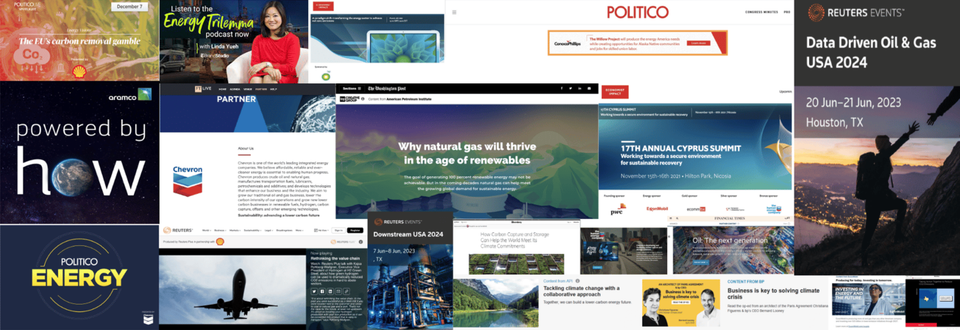
- The "earned revenue" trap - The prevailing wisdom in philanthropy is "philanthropy can't save journalism, so we don't want you to get hooked on philanthropic funding." We don't want to be reliant on grants either, I can't think of a single outlet that does; nor do we want to be overly reliant on advertising dollars. The goal is resiliency, which stems from a solid mix of revenue streams so you're not overly reliant on any one of them—for us that looks like advertising, reader revenue (cough cough link above), production services for other orgs, consulting and optioning fees from other media interested in our reporting, and grants. But what irks me about this thinking is that none of the people promoting it ever seem to be funding or supporting broader efforts to address the systemic drivers of journalism's demise, nor are they aware of the role philanthropy has played in contributing to the problem. None seem to be aware of how for-profit newsrooms have solved this problem, either, which is largely via corporate-sponsored content and events, a large portion of which are funded by polluting companies. As we've covered before, Reuters hosts one of the largest oil industry events in the world, The New York Times makes sponsored content (including podcasts) for oil companies, and Politico never met a Chevron-sponsored newsletter it didn't love. Are we to look at that as a win? A path forward?
The various rules around nonprofit media orgs, which come with all sorts of restrictions around earned revenue if you're accepting grant money at all, also seems to have escaped climate funders' attention. And that's all before we get to the fact that the public wasn't super into having to subscribe to 10 different outlets and newsletters 5 years ago, that's certainly not changing as the cost-of-living crisis worsens. If the plan is that only outlets that can earn enough from ads and subscriptions will stay afloat, we'll be left with a small handful of outlets and the same situation we had back in the 1800s where only the elite could afford to be informed. It reminds me of something media scholar Jay Rosen said to me in an interview back in 2020 about where he saw the future of journalism headed: "There are organizations for which verification--did this happen or not--will still be foundational to how they do journalism, but it will be a minority product. Not just in the sense of a small market, but also a high price for that good, which will reflect how valuable it is for an elite-only audience to have that information."
Perhaps that's what philanthropy, the world's best tax write-off for elites, was always after?
Click below to hear it straight from Jay himself:
- Conflating strategic communications and journalism God this one drives me nuts. So many funders expect the journalism organizations they invest in to effectively become part of their strategic communications campaign. Whenever I push back on it, the assumption is that I'm being snooty about being "a journalist" or am not playing well with others or am looking down on campaigners or comms experts. None of that is true and if any of these foundations had ever bothered to consult one single journalist on their journalism funding strategy they would understand very well what the actual problem is: it undermines press freedom and press protections and creates enormous legal risk for organizations and individuals that are chronically under threat and cash-strapped. If journalists are seen as being part of an advocacy campaign, whatever legal press protections are provided to them by the laws in their home country, which are thin enough as it is, are entirely removed.
A great example from a story we've reported on is what happened to documentary filmmaker Joe Berlinger when he made the film Crude about the decades-long fight against first Texaco and then Chevron in the Ecuadorian Amazon. Berlinger had been pitched the story by a lawyer working for the Ecuadorian defendants. That same attorney connected him with a potential funder for the film, who went on to fund it. At a certain point the lawyer told Berlinger he was considering going to the same funder for litigation funding and Berlinger asked him not to because it would erode his First Amendment protections. The lawyer ignored that request, which Berlinger only found out about during court proceedings years later, and then as the film was being made and Berlinger was checking that he had his facts right, the lawyer also made various requests for changes that he described as being related to accuracy issues. Those two things resulted in Berlinger being included in the racketeering case Chevron filed to stop the defendants from collecting the settlement owed to them, having his footage subpoenaed, being declared a propagandist by the court and losing all press protection, being harassed by Chevron's attorneys (including his family being followed), massive financial losses, and a huge years-long career hit. That's what happened to a journalist who was being careful to keep a line between himself and a campaign & case, and it happened because neither the funder nor the campaigner had any concern for protecting him. Probably because they were ignorant, but should that really be an acceptable excuse for funders that are getting involved in journalism, ostensibly with the goal of supporting it?
- Cannibalizing investigative journalism The most expensive thing for outlets to produce is investigative journalism, the sort of thing we focus on at Drilled. So, as advertising revenue has plummeted, outlets have increasingly stopped doing it. Philanthropy to the rescue! Except, not really, because instead of supporting existing outlets to bolster or maintain their investigative desks—can't control the content that way, too dangerous—climate foundations have opted to fund campaign research organizations instead, so that they do the investigations and then distribute them out to the journalists of their choosing. I don't feel like it takes any experience in media to see where that was destined to lead, but let's quickly map the path here anyway.
At first, it seems like a win-win: outlets get to keep running investigative climate stories without increasing their budgets, philanthropists get to make sure the stories they want are getting out there, and the researchers do a really good job so what's the problem? For a start, when you get media outlets hooked on free content, they get to keep not investing in investigative reporters and editors and maybe even think about laying a few climate reporters off—why waste the money when they can get stories for free? That's especially true if it's content in a particular vertical, like climate, that requires specialized knowledge.
Then, you also end up with fewer and fewer stories that are stemming from a reporter's own curiosity or something the public needs to know, but instead from what philanthropists want people to know or do. Even if I, as an individual, agree with what said philanthropists think, as a journalist who believes in the value independent journalism can bring to the public and to democracy as a whole, I don't think letting any outside entity dictate what sorts of climate stories do or don't get told is a good path, particularly when said entity is being run by a class of people who have very little interest in fundamentally changing anything but our energy source. The net result is not just a lack of investigative climate reporters at major outlets, but also the rapid erosion of the sort of institutional knowledge that would even enable such a thing to exist at those outlets. Now many of them are getting rid of their climate teams altogether and philanthropists are scratching their heads wondering where these stories they've paid to produce can even be published, without once realizing that they have directly contributed to the demise of the very thing they saw as valuable to begin with.
To be clear: nonprofit investigative research is tremendously valuable, I'm not proposing doing away with it. This is not a one or the other situation, the problem is that in choosing to fund only one, foundations have cannibalized the other...which will ultimately be the downfall of both.
- The magpie problem Yes, yes I know it's browerbirds that are actually obsessed with shiny things, but I'm sticking with magpies because they're both curious about and terrified of new things and change, which describes most philanthropic foundations quite nicely. A few years ago, journalism, narrative, and disinformation were big buzz words in the climate philanthropy space, and they all converged around it; now, particularly in response to the Trump administration, they are like Homer Simpson disappearing into a hedge.

Forget about information or disinformation, let's get back to the safe space of batteries and tech! What about a climate-friendly Joe Rogan? Influencers? What's our AI strategy?!!!!
Journalism is not a shiny object to be played with and put down a year or two later, it's the fourth pillar of democracy. Engaging in it should be done with at least as much seriousness and care as getting involved in the legal system. Philanthropists may not want to save journalism, but they should be aware that engaging with it at all can lead to fundamental structural shifts long after they disappear into the hedge...and maybe try not to seriously damage it as they're passing through?
This problem could be largely solved if climate foundations would partner with journalism foundations, or take a hot minute to understand how media actually works. None of the issues I've outlined above are complicated or challenging to fix should anyone care to. Here's hoping they will!
Climate Must-Reads
- "Louisiana senator helped secure Meta's largest data center. Then he sold the land beside it." by Garrett Hazelwood for Floodlight. State senator John “Jay” Morris helped bring Meta’s Hyperion project to Richland Parish, but not unlike the constituents he sold out, Morris didn't want to be the project's neighbor.
- "Anti-ICE Protesters Found Guilty in Case That Guts Free Speech Rights," by Malcolm Ferguson for The New Republic. If you don't think this is a climate story, think again. As we've covered extensively, the crackdown on protest we're seeing now started with the backlash to pipeline protest (particularly the 2016-2017 Standing Rock protests). An absolutely terrifying precedent: protestors face 6 years in prison for simply blocking a bus.
- "Europe’s fossil fuel reliance could be weaponized in war, EU chiefs warn," by Zia Weise for Politico Europe. Some global leaders are finally waking up to the fact (or being forced to publicly acknowledge something they've known for a while) that fossil fuels do not, as the industry has been claiming for decades, contribute to national security. Rather, true energy security, and with it national security, come from energy sovereignty, which is going to require breaking energy grids free from the global commodity market.
- [study] "Asthma-related ER visits spike in Baltimore after nighttime heatwaves," John's Hopkins University. New research on one of the many health impacts of climate change, the impact of warming on respiratory illnesses like asthma. As climate reporter Kendra Pierre-Louis noted, good for them for mentioning that this critical research was funded by a Department of Energy grant program that has now been de-funded.
- "Denial and Misinformation: How Politics Weakens India's Air Pollution Response," by Rishika Pardikar for Drilled. One of the many great things about working with reporters in multiple countries is the amount we all get to learn from each other. This window into how misinformation around air pollution works in India is fascinating, particularly the bit about how some politicians will swear up and down that Indians are better acclimated to air pollution and thus it's not a concern for them.
Hi! If you've made it this far, you must really enjoy our newsletter. Consider becoming a paid subscriber to support more investigative climate reporting. Thank you for your support!