Meet the Rightwing German Media Mogul Enabling Technofascism
For a long time now, I've been keeping an eye on the media purchases of the infamous private equity firm Kohlberg Kravis Roberts, or KKR. I say "infamous" because they were the stars of the book (and the film it inspired) Barbarians at the Gate. KKR popped up on my radar initially because it is one of the largest private equity owners of fossil fuel infrastructure, particularly connected to liquefied natural gas (LNG). When I asked a source in the private equity space what trends he was noticing lately, he said there had been a recent uptick in private equity firms buying up both media and PR companies. So I looked to see if KKR was part of that trend and sure enough they were (for more on that, you're gonna have to read my book).
For private equity firms, media and PR buys can be investments in their own right, but they are also strategic plays. If a large part of your portfolio is, say, fossil fuel infrastructure, and one of the things that can determine whether that investment pays off is public opinion and its ability to influence policy, it might make sense to invest in the tools necessary to shape hearts and minds. KKR's first big foray into this field was a major investment in German media company Axel Springer in June 2019. It bought out all of the minority shareholders in the company and became the majority shareholder. That initial deal closed by the end of the summer of 2019, but it was just the first step in a larger strategy. By April 2020, Axel Springer was de-listed from the stock exchange and taken private again. That might seem like the opposite of the sort of growth an investor would like to see, but again, it was part of the plan here.
A German media company might seem an odd choice for an American private equity firm, but Axel Springer had forged a joint venture with Politico in 2014. Together the two bought out EU-focused newspaper European Voice, and re-branded and re-launched it as Politico Europe in 2015. In short order, Politico Europe was routinely being named one of the most influential reads amongst European lawmakers. Given the EU's place as one of the few in the world doing anything to regulate fossil fuel emissions, particularly methane, KKR's interest makes more sense.
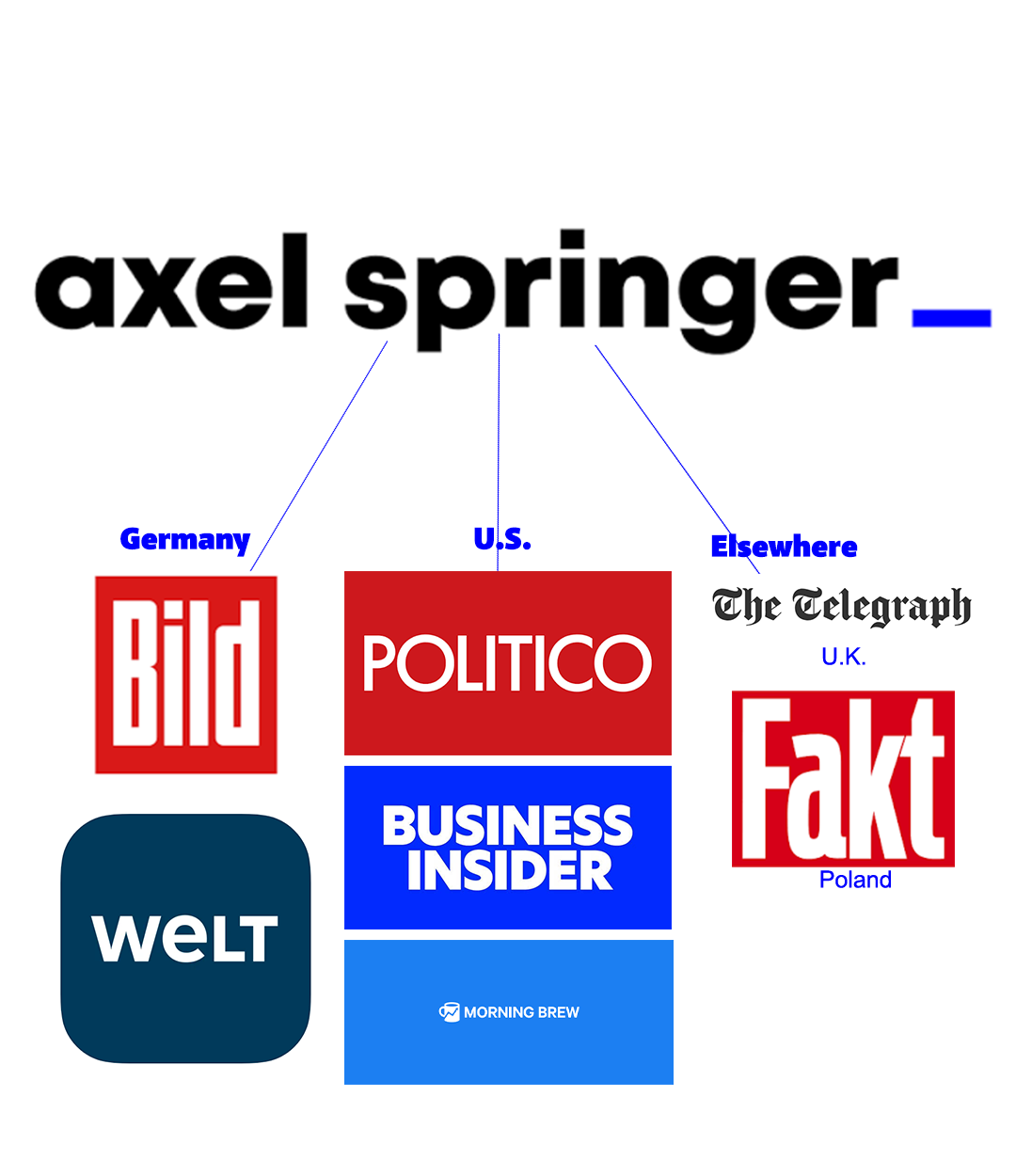
And it wasn't just a buyout, it was a power shift. KKR's investment enabled the de-listing of the company, and the placement of greater control in the hands of the Springer family—primarily Friede Springer, the widow of Axel Springer. In September 2020, Friede Springer transferred a 15% stake as a gift and sold an additional 4.1% of Axel Springer shares to Axel Springer CEO Mathias Döpfner. Springer retained just over 20% for herself. The following year, Axel Springer moved to not only buy out Politico's share in Politico Europe but to acquire its US operations as well. This also gave it control of the largest dedicated energy and climate reporting desk in the world, E&E News. Since going private Axel Springer has acquired other outlets as well and is now the largest publisher of news in Europe.
Axel Springer holds its outlets to a set of five key rules—it calls them Essentials: support of freedom, free speech, the rule of law and democracy; support of the state of Israel; support of the transatlantic relationship between the EU and the US; support of the free market economy; and rejection of political and religious extremism. You can see how some of these would inherently bias coverage. But perhaps more importantly, Axel Springer seems to enforce these rules inconsistently. In 2025, for example, its German newspaper Welt ran a controversial op-ed from Hungarian dictator Viktor Orban just four weeks before his election, and an equally controversial op-ed from Elon Musk supporting the rightwing extremist AfD party ahead of the German elections.
Then there's Döpfner's many connections to global technofascists, which became a much bigger part of the Axel Springer universe last year. In 2025, KKR and Axel Springer completed the last phase of their arrangement, the splitting off of the digital classifieds business from the media business, with KKR taking possession of the former and Döpfner and Springer now holding 95% between them of the Axel Springer media business. Axel Springer himself was known for using his various media holdings to steer political discourse toward the right. Now, under Döpfner's guidance, the company is returning to those origins.
Döpfner, a supporter of U.S. president Donald Trump, has long sought the company of what he describes as "contrarian" thinkers in the Silicon Valley universe. In 2018, he tapped Palantir co-founder and CEO Alex Karp to sit on the Axel Springer board. It was during Karp's tenure on the board that the KKR deal happened.
I first looked into Axel Springer as part of research into KKR for my book, but I'm writing about them today because of a piece of news that popped up in my inbox on Friday—a press release from Axel Springer about the recipient of its annual award for 2026: Karp's Palantir co-founder, Trump backer and J.D. Vance puppeteer Peter Thiel.
Nowhere in the press release is it disclosed that Mathias Döpfner's son Moritz went to work for Peter Thiel in the early 2020s, that he was chief-of-staff of Thiel Capital in February 2025 when he left that post to start his own fund, Döpfner Capital, or that Peter Thiel was the primary backer of that fund, stumping up $50 million of its initial $75 million raise. The German business magazine that broke that news (not one of Axel Springer's) made special mention of the fact that "in investor circles," Moritz Döpfner is now being referred to as "the German J.D. Vance" on account of the similar trajectory he appears to be on (Vance, too, worked Thiel's fund before branching out to start his own, which Thiel funded).
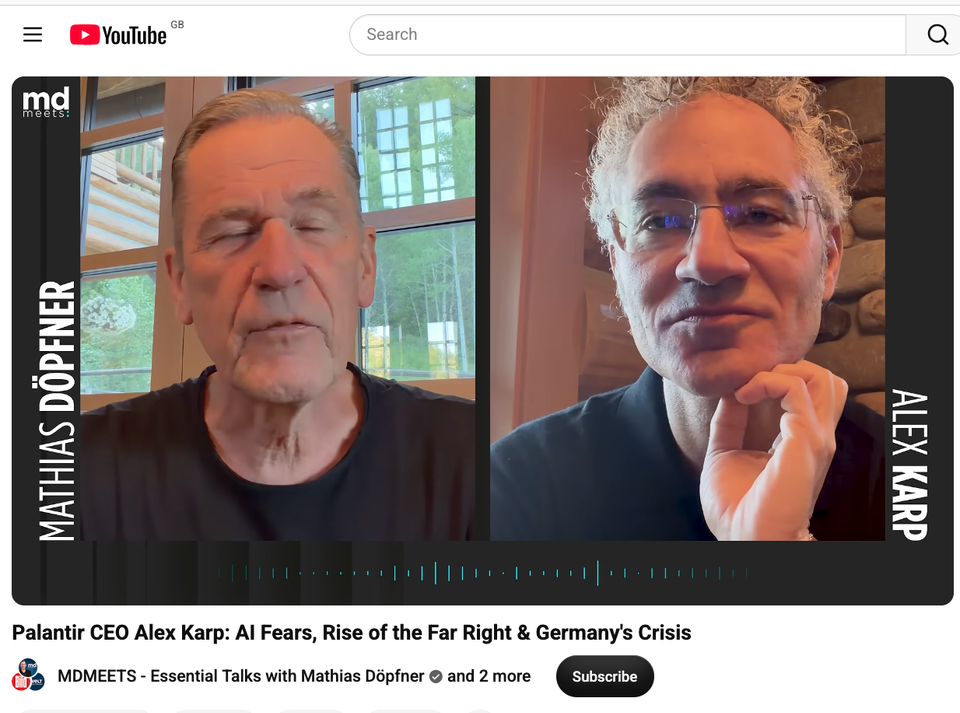
The news prompted me to look up whether Karp is still on Axel Springer's board. He left that position in early 2020, but he and Döpfner appear to still be close. Last week, Döpfner was at Karp's mountain house in Sun Valley, Idaho to tape a conversation that looks like a scene from the satirical film Mountainhead but was quite real: the rightwing media mogul and the technocrat discussing the sad state of democracy today.
The first quarter of the conversation centers around Döpfner's description of Karp as seeming like a leftist intellectual when they first met (at a party in the south of France apparently) but now being described as some sort of Darth Vader of the alt-right, and why and how that happened. The answer of course is going to be "media bias" because these guys simply cannot conceive of a story in which they are not either the hero or the victim and, most often, the victimized hero, saving all us ungrateful plebes.
Karp comes back again and again to the claim that actually Palantir is very popular and he has more fans in tech than anyone else. Okay! Then he explains that Palantir has stopped "hundreds of terror attacks" since its launch, and that it has been fundamental to Ukraine's fight against Russia. Döpfner helps him out, saying how crazy he thinks it is that people attack Palantir when it's "so obviously on the side of democracies."
A casual observer might find themselves nodding right along, thinking, "yes, what's the problem with stopping terrorism?!" But remember, as we've covered a lot at Drilled, the state can define anyone it wants as a "terrorist." This past week, the Trump administration moved to designate "radical leftists" as terrorists. When it announced this measure, the Trump administration, which never came across a sentence it didn't think the word "unleash" would improve, declared, "Trump administration unleashes global campaign to crush radical left terrorism," and explained that step one in this campaign will be to limit the movements of these "radical leftists" both into and out of the country. The Trump administration's definition of "radical leftist" is whatever it wants it to be at any given time, from someone who opposes ICE to someone who espouses "Antifa" ideology. Because somehow it's now anti-democracy to be antifascist.
Palantir's role in campaigns like that lies in surveillance and data. It pulls together all the data you've ever created and makes it actionable to police and government agencies. There is no surveillance state without data brokers like Palantir, and folks in Thiel's and Karp's universe have long waxed poetic about the benefits of surveillance tech for keeping elites safe from the unwashed masses. It's also worth remembering in this context that Peter Thiel has been publicly writing and speaking about his disdain for democracy since at least 2009.
The timing of Karp and Döpfner's conversation is not coincidental, either, nor is Karp's offhanded remark in it that he only speaks to Axel Springer-owned outlets in Europe now. In 2023, German federal courts put limits on what police in one region were allowed to use Palantir technology for, and then-Interior Minister Nancy Faeser (SPD) moved to ban the federal police from using it at all. But now Faeser has been replaced by Alexander Dobrindt (CSU), a man so friendly to Palantir that he's been nicknamed "Lex Palantir." In March 2026, Dobrindt introduced legislation that would clear the way for police use of AI-based surveillance software (including Palantir) in federal police agencies. So when Karp says Europe is "irrelevant" to him except for Germany, because he cares... it reads as deeply dishonest.
No surprise, here, both believe that the free market economy is the pathway to freedom, rights, and democracy, and that the "professional media" is technologically illiterate and unfair to tech companies. Karp claims that Palantir is actually going to be the thing that protects people from government surveillance and that he is one of the last remaining "true progressives." Döpfner never asks him to explain either of those claims, he just moves on to how unfairly the great German Peter Thiel (who was born in Frankfurt) has been treated.
I absolutely agree with one thing Karp says here: no one can afford not to learn from the likes of Thiel. I would apply the same thinking to Karp himself; we ignore or dismiss the tech broligarchy at our peril. Within the context of this seemingly benign conversation between friends at a mountain chalet, Karp brilliantly and casually normalizes: the AfD—Germany's far-right, neo-nazi party—as "complicated" and understandable; Western supremacy; Zionism; the need for a European tech czar, which he describes Thiel as a perfect candidate for; the idea that AI is a "natural resource"; and the establishment of an economic zone in Germany—that's a diplomatic way to describe the creation of a "network state," a region governed not by laws or democratic norms but by corporate interests (something Thiel and his comrades have been pitching for years). He also acknowledges that AI is a "completely different sort of revolution" where the people involved in the industry aren't just going to do slightly better or become rich, but become astronomically wealthy as a result of a technological revolution that might not benefit everyone. He chalks both some of his success and some of the criticism that comes his way up to being neurodivergent. And he acknowledges that not only is there a wealth gap growing but an understanding gap, where the people succeeding are "misshapen IQ experiments" that the average person wouldn't have much in common with or like very much, "and vice versa."
My point here is not to catalogue and analyze everything Karp and Döpfner said, but to highlight the context and the influence at play. This is the head of the largest publisher of news in the EU, giving a platform for the second time this month alone to the world's largest AI-powered surveillance company.
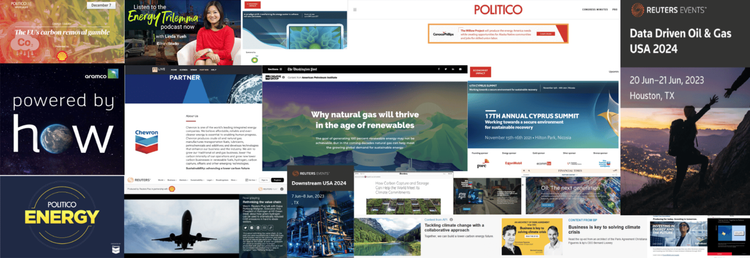
When we talk about media and influence, it's often quite a siloed conversation—what Elon Musk has done with Twitter, the way tech companies have built up a parallel media ecosystem, the role Joe Rogan or podcasts in general played in the 2020 US election. But more often than not, all of those streams intersect with and influence each other. Here we have a powerful European publisher that's little known to most Americans, though his publications hold enormous sway there; a publication with huge political influence in the US and the EU (Politico) that has one of the largest climate reporting teams in the world but that also accepts large sums of money from oil companies for sponsored newsletters, events and podcasts; a private equity fund that set it all in motion (KKR); an AI surveillance company (Palantir) whose three founders have championed the "network state," and who often, despite Karp's insistence that he is pro-democracy and progressive, find themselves aligned with antidemocratic far-right actors; and multiple direct relationships to technocrats, including not just Karp and Thiel, but also Elon Musk.
It's a systemic problem that requires a systemic response. I sit in a lot of meetings where media folks or climate folks or both are trying to figure out what to DO in the current situation. The feeling seems to be roughly shock at having lost so suddenly and so comprehensively, mixed with uncertainty over what to do next. I don't have an answer to that very big question, but I do know that figuring out the path forward requires understanding what you're actually up against.
One of the reasons Drilled consistently connects the dots for folks on stories and power players that intersect is that we take a different approach to journalism. Rather than breaking news and feeding the beast of online content, we pay people a decent wage to be beat reporters, to keep reporting on the thing they know most about. It's expensive, but we think it's worth it, and we hope you agree! If you get this newsletter for free, please consider either upgrading to a paid subscription if you can afford it, or forwarding it and recommending Drilled to other folks if you can't. Thank you! Your support is what keeps us afloat.
Climate Must-Reads
- "Climate's Compounding Financial Toll Is Becoming Harder to Ignore," by Justin Worland for Time
- "LA's Next Mega-Event Test: The Coming Climate Olympics," by Alex Nieves for Politico
- ICYMI: Go check out Carbon Captured, our new series with ProPublica that looks at what fossil fuel companies are looking for when they invest in academic research, what they get, and how it shapes the way we understand both the problem of climate change and the available solutions to it. The first two stories are out now!
- "Beyond Denial: How oil execs shaped a landmark climate study," by Maddie Stone, is a deep dive into how bp's relationship with Princeton's Carbon Mitigation Initiative shaped how a generation thought about solving climate change.
- "False Promises: Why carbon capture and storage won't fix our climate crisis," is an incredible visualization from Katie Worth and Lucas Waldron that shows just how infeasible the big CCS plan we're hanging our hats on truly is.